Kuma Brings the Pearls
Acting, Direction and Editing by Beth Woronoff Brown and David Brown
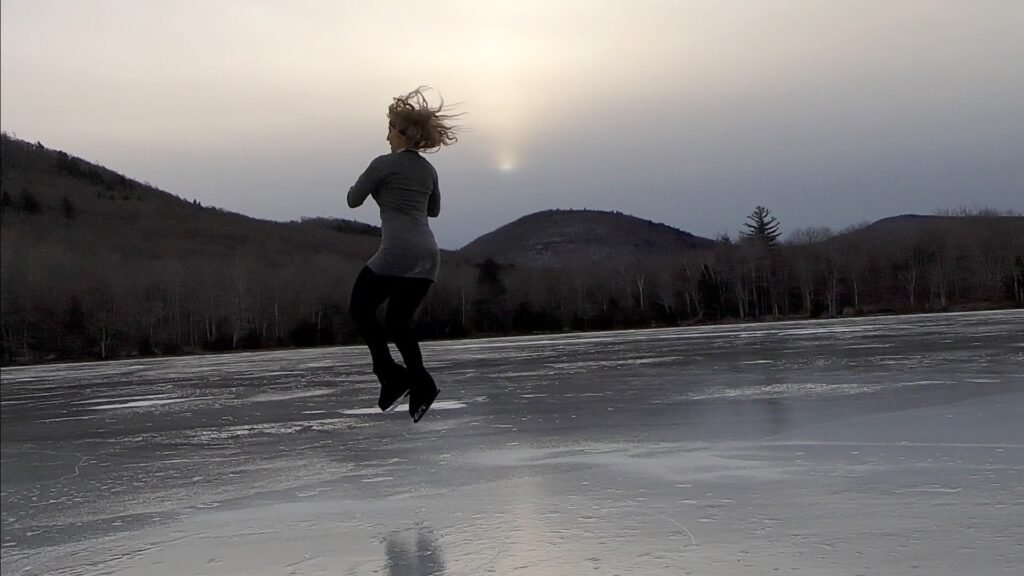
Shot on Colgate Lake at sunset. This footage was so amazing we decided to make a film.
Kuma Brings the Pearls: A Love Story on Three Lakes, 2019. Shot on frozen lakes in New York State. The Jamaican enlists the help of the dog, Kuma, to win over the Skater. Co-directed, edited and performed by Beth Woronoff Brown and David Brown.
We are a collaboration between a dancer and an ice skater. Using video we can make far more choices than we can in a live performance at a skating rink. The plot line is very sparse, and we use what happens in it as a framework for the movement. The shoot is just the two of us and our dog. We look at the camera as another dancer and take turns filming one another. There are three actors: the Woman, the Dog and the Man.
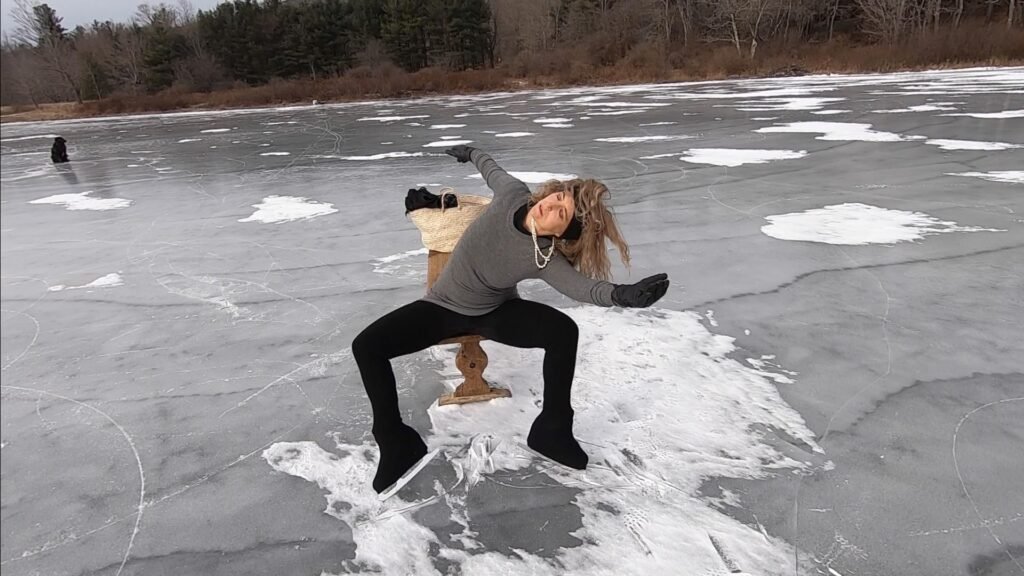
All we had was a bench and the pearls.
The Woman finds Kuma wearing the pearls, takes them off the dog and puts them on herself. The image asks a question — who put the pearls on the dog, and why? The only other actor is the Man, so it must have been him, and he must have a connection to her. The context for the work is our twenty-year relationship, our memories and our shared experiences. The movement is improvised. David prompts me, sometimes with words and sometimes with his own movement, and what I bring comes out of the lake itself and out of the emotions the story is made of. Before each session we settled on a few things we wanted to catch. Every object we chose has a personal meaning for us: the bench, a straw bag, practical things someone skating on a lake might have with them, and the white dress on a hanger that Kuma could lead the Woman to.
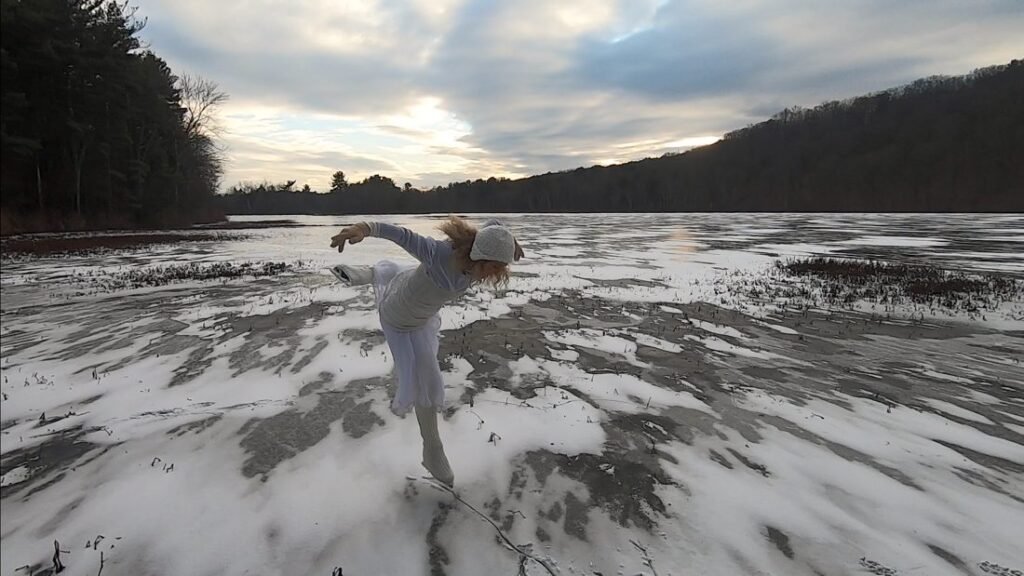
The Skater discovers a mysterious white dress on a coat stand, and puts it on.
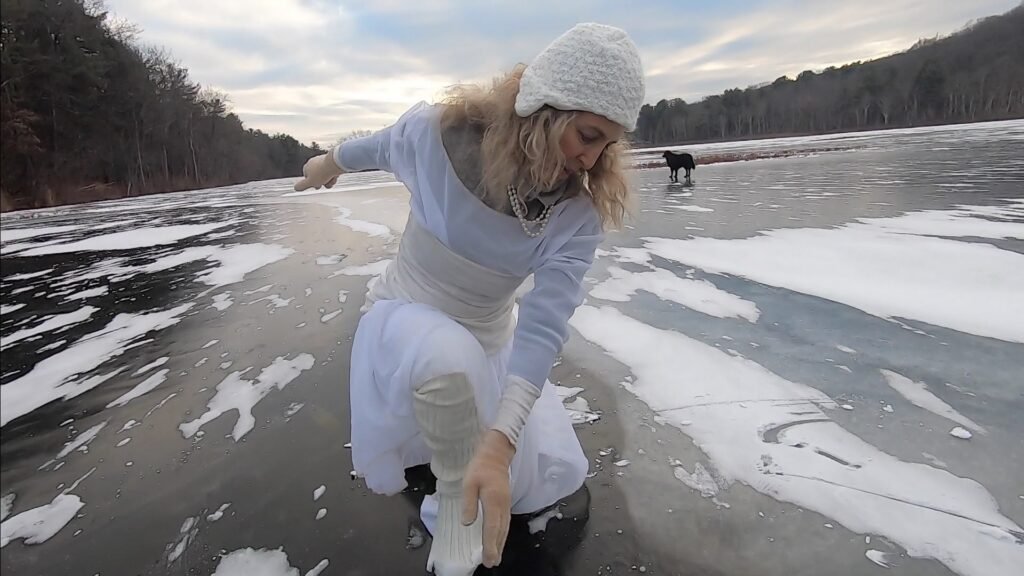
In the white dress, wearing the pearls, with Kuma away across the lake.
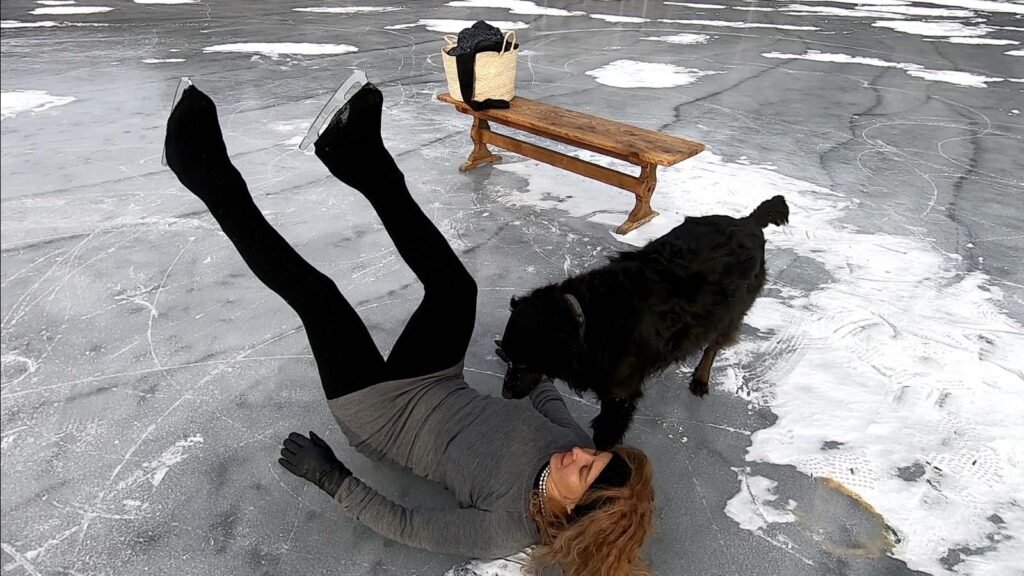
Kuma arriving first. David comes into the frame a moment later to help me up, and we kept the shot.
The camera is an armature for the movement, and it is very mobile. It pans the ice to show the markings left by the blade. It looks out from behind leaves and branches. It follows the action and chooses what the viewer sees and hears. We made decisions about when to keep the camera person invisible and when to let them be seen as one of the actors. In one shot David reaches into the frame to help me up after I have fallen, and we kept it.
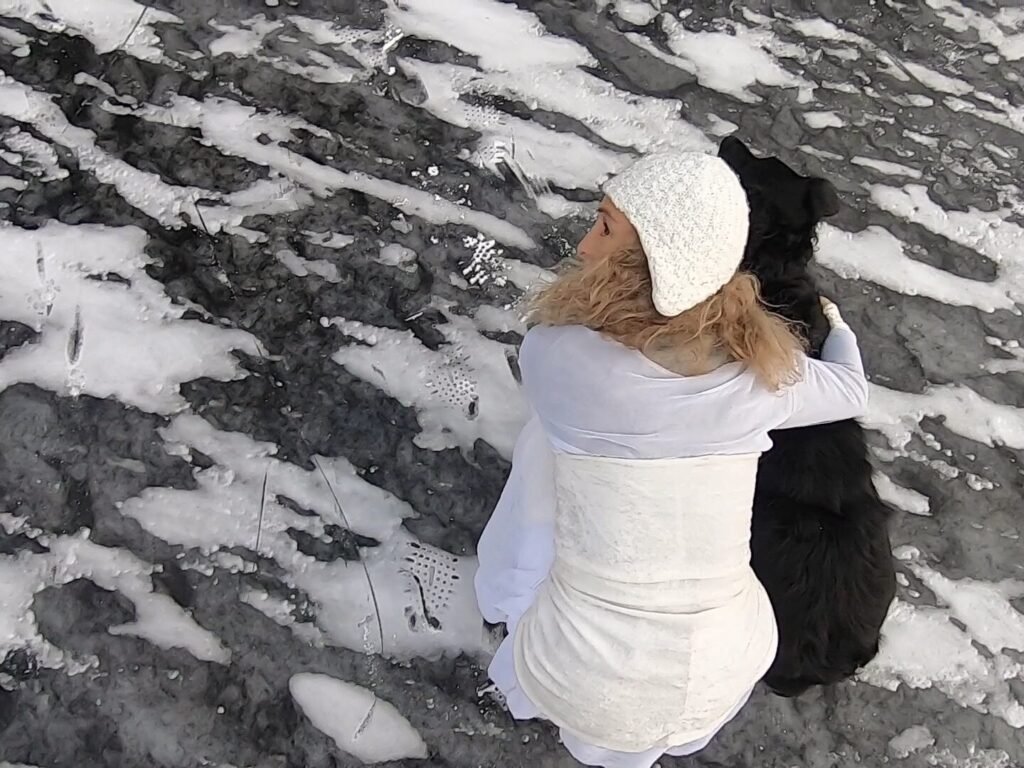
The dog who brings the pearls, and the marks a blade leaves behind on the way.
The soundtrack is squeaky boots on the ice, snow crunching underfoot, and blades on a tight curve. Why not a rink. Rinks are supported by hockey and figure skating. They are large arenas with boards and plexiglass up to twelve feet high separating the stands from the ice, no lighting set up, and a space too vast for what we want to do. Working on frozen water opened everything: a beautiful setting, the natural theatrical light of the sun going down, and the ability to move the viewer through the space rather than seat them behind glass.
Working on frozen lakes means a lot of time with weather reports, calculating how many hours below freezing are needed to make four to six inches of ice. We scout lakes and rivers in different parts of New York. If rain is followed by snow and then a hard freeze, a perfectly smooth surface turns bumpy and we have to find another one further south where the ice has only just formed. One day a lake is like glass; the next day snow has fallen and the landscape is a different place. There is no way to re-shoot a section, because the setting would no longer match.
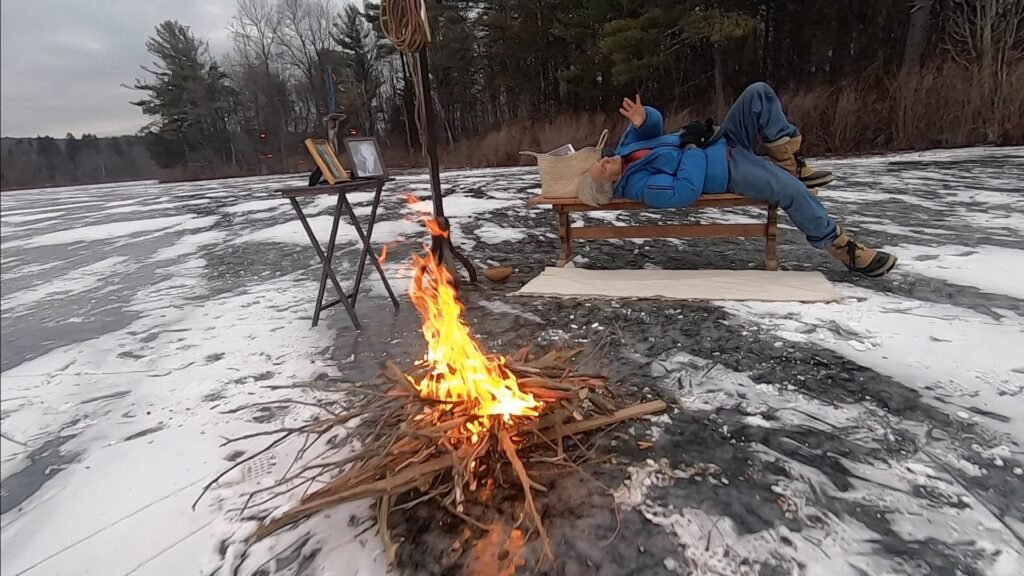
David gesturing after making a fire for the Skater to return home to.
The film