Figures
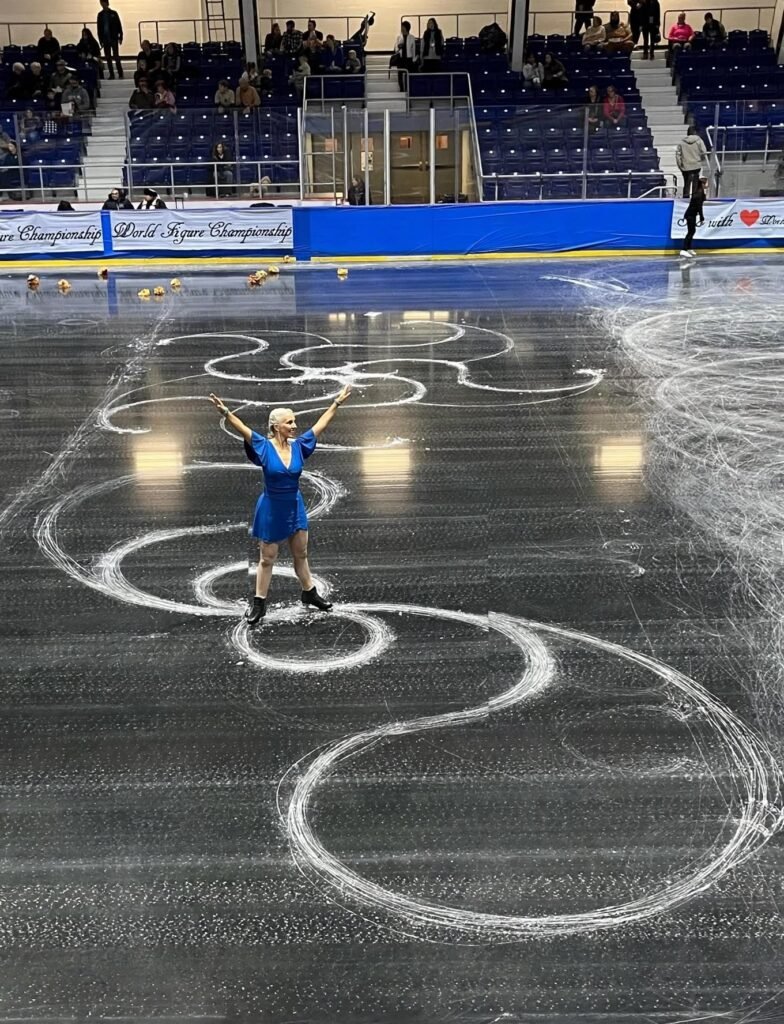
A school figure is a shape cut into the ice with the blade and then traced again, twice more, each pass laid as exactly as possible on the one before. No music, no jumps. A circle, or two, or three, with turns placed where the curve changes. Skated well, a figure eight looks like two rings of steel — pure circles you could ring like a bell and hear the pure tone.
What holds me is the feedback. The ice pushes back harder than the floor does. On the floor it’s a body and gravity and a surface that keeps nothing. On ice it’s the ice, my body, my blade and my boot interacting, and what they make between them is a trace. The trace tells you everything: what sort of skater made it, what they were doing wrong. You can read a skater off a line in the ice.
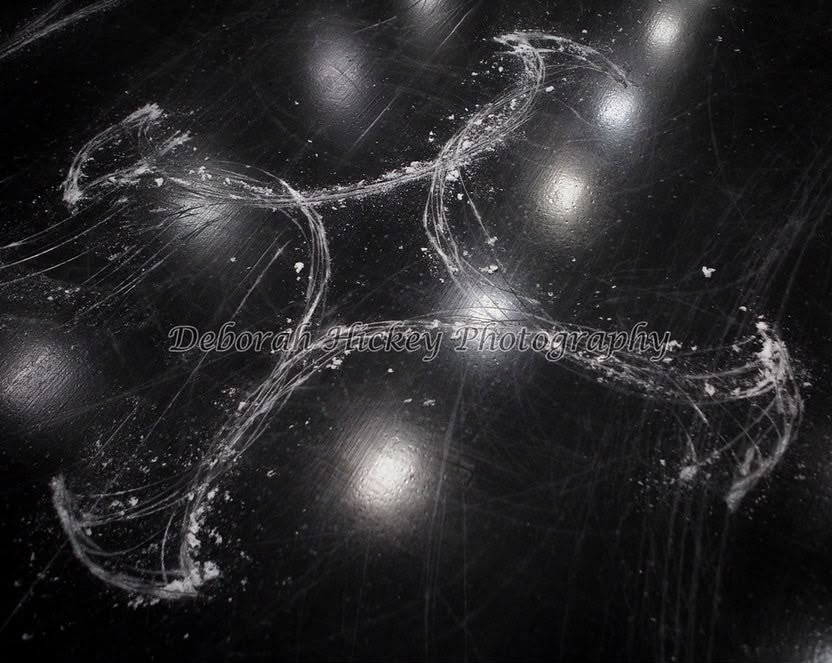
A Maltese cross-my first attempt at it. I learned to skate it much better over the years. Photograph: Deborah Hickey / WorldFigureSport.org
Ice and blades are bound to a system of curves, a physical geometry that requires a deep connection with your body. When I skate a figure I put my mind on the small spot on my blade where I want my weight to be. I stabilize my body so I can stay steady, so I can connect to the curve, so I can be one with the pure curve.
Before there were school figures there were just figures. Skaters invented their own — rosettes, stars, crosses, curlicues — and were judged on originality. They were meant to be, as Georg Sanders wrote, the creations of the artistic faculty of each individual. In England for fifty years skaters worked patterns together around a shared centre, calling and answering each other on the ice. It was a language as much as a sport. In 1897 the International Skating Union adopted a schedule of forty-one school figures, proposed by the British, and that list stood as the standard everywhere until 1990.
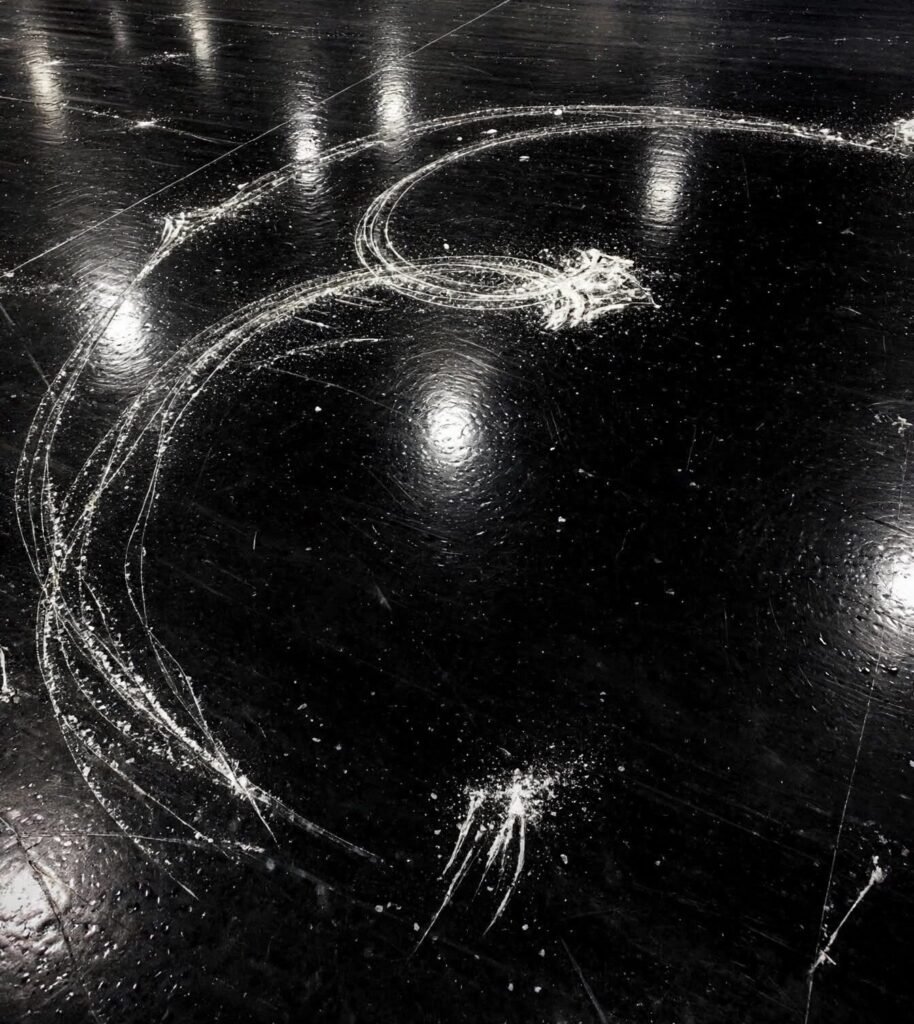
One of the old invited figures. A practice session, so three passes rather thanthe four asked for in competition, each laid over its own print. The thickening where they do not quite meet is the whole report.
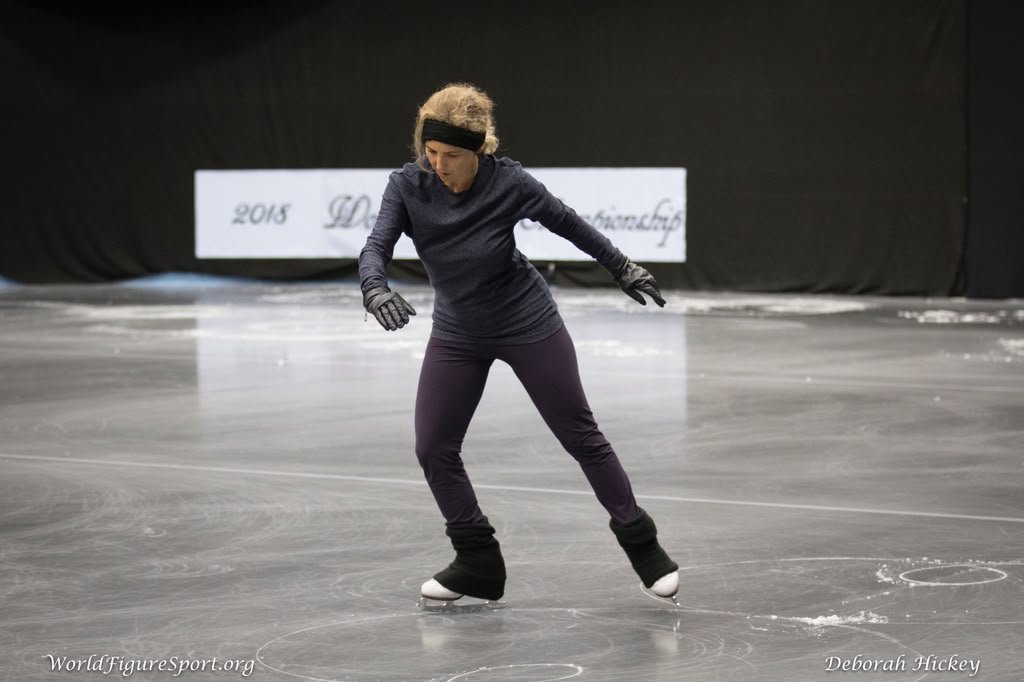
First tracing finished, at the championship, my first year. Note how little the ice gives up this angle- the lines are there, and you can barely see them.
It narrowed what a figure could be. The invented figures went first, dropped from the ISU championships after 1896, and with them went turns that had never been in the forty-one — the cross cut among them, an old Canadian figure that came out of a failed loop and took its name from the shape of a blacksmith’s anvil. Those survive in books. When I began competing, figures were seventy per cent of your score. Over the next ten years that value fell away. Figures didn’t bring in ratings, and ratings had become important to the governing body of skating. The ISU voted to drop them in 1988; of thirty-one national associations only the United States, Canada, Britain and New Zealand voted against.
By the time I stopped competing in the late eighties they were being phased out, and then they were gone. I had passed the sixth figure test. Hardly anyone knows how to skate them any more. Younger coaches don’t really know the difference between the turns — three turn, bracket, rocker, counter — or how to skate a real loop. I had done all of it. When I came back to skating I went looking for the people still doing figures, and found Karen Courtland Kelly, whose organization World Figure Sport was then in its third year. Karen has brought the figures back from extinction – the old invented ones among them, the ones that had only survived in books. I called the number on the website and Karen picked up and spoke to me for an hour. I signed up to skate the World Figure and Fancy Skating Championship in Vail. Sixteen figures and a fancy skate in five days was nerve-wracking and exhilarating, and the other skaters were the most interesting people.
Figures became the centre of my skating. They made me steadier and more agile. I can practice for an hour or more, completely engaged in finding what position my body needs to be in to be on the perfect edge.
The creative figure is the other half of it. Almost everyone makes some kind of symmetrical flower design. I wanted something elegant and unique, and mine was meant to be watched, not only looked at afterwards. I work the way I work: I skate and improvise, then I draw and try to figure out what I did, then skate it again and refine it. I called mine the Infinity. I tried a version in 2023; the final one came in 2025, in a practice with Karen looking at my idea.
I took the silver in the fancy skate in 2018, my first year of competition, the bronze in 2023, and the silver at the 2025 World Figure Championship.
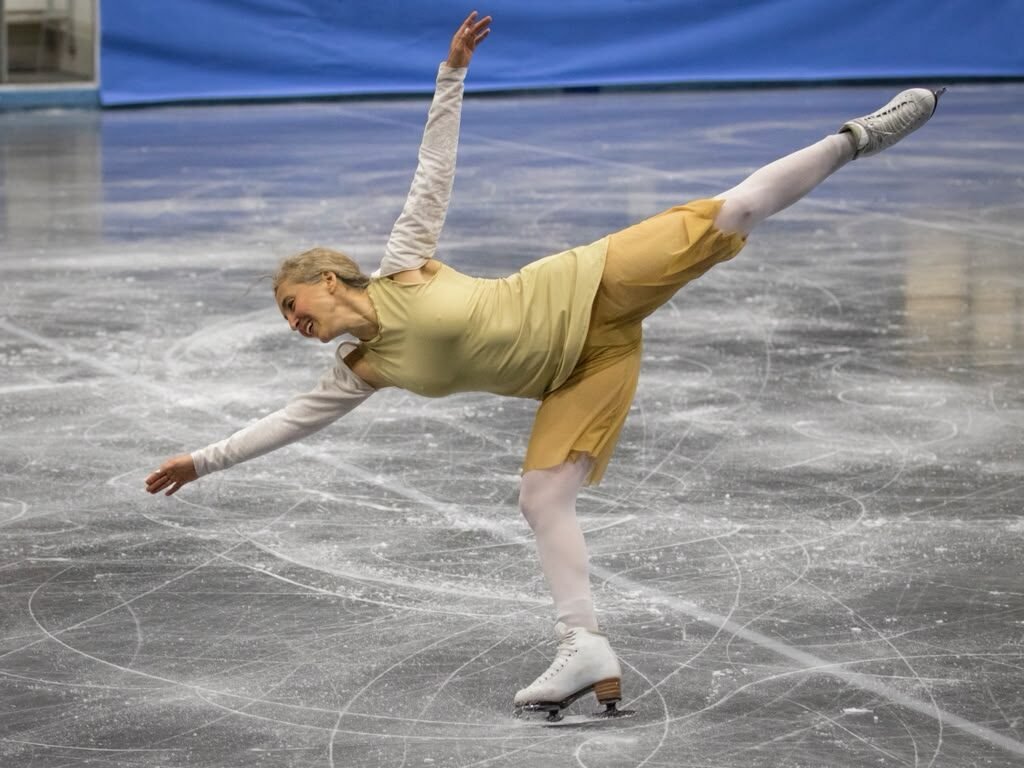
The fancy skate, 2018, my first year competing: Gambol, a piece to Pachelbel’s Canon that David and I choreographed together. Photograph: Deborah Hickey / WorldFigureSport.org
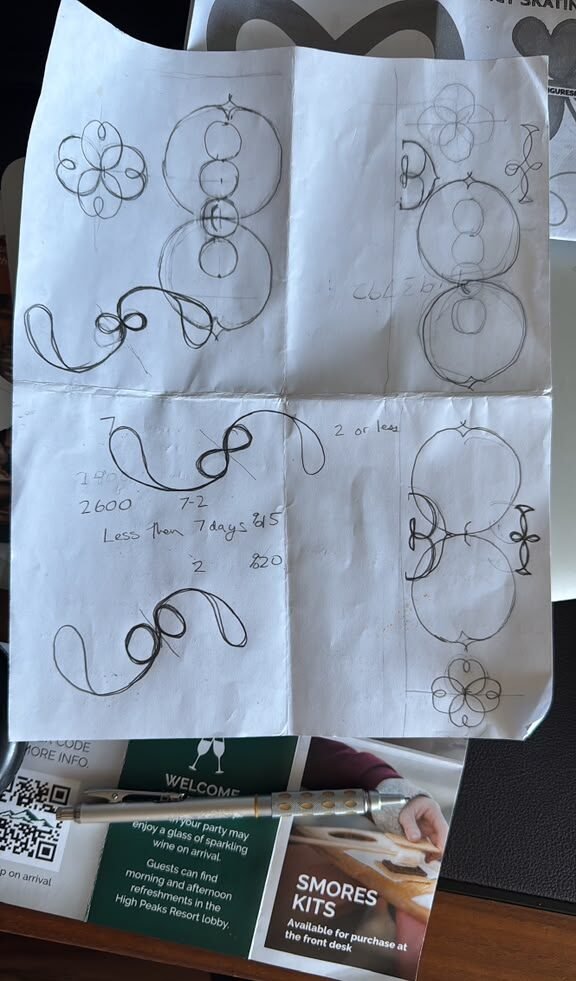
The figures required at the 2025 championship, drawn out by hand on a notepad. The circled one is mine: the Infinity, asymmetrical among all the seymmetrical ones
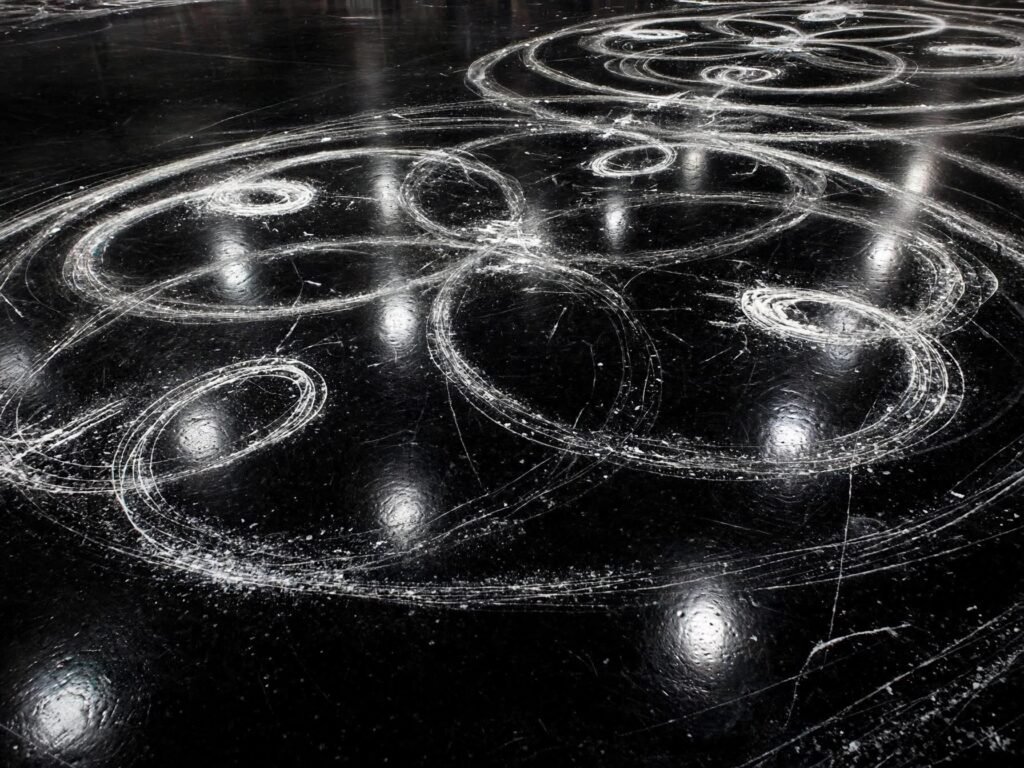
The forward outside loop and the forward inside loop, skated on the same centre at ninety degress to one another. Practice ice, where the figure is very hard to see- I turned the ice black so the trace would read. Beth’s own photograph and her own edit.